
Posted September 09, 2026

By Emily Clancy
Pink Slip Pete
Two AH-64 Apache helicopters buzzed Kid Rock’s Nashville-area mansion in March.
The musician, standing outside near a swimming pool, clapped his hands, raised his fist and saluted. The Apache crews appeared to salute back.
The video went viral.
The Army opened an investigation into the unauthorized flyby and temporarily grounded the pilots. Then Defense Secretary Pete Hegseth stepped in.
“Pilots suspension LIFTED,” he wrote on X. “No punishment. No investigation. Carry on, patriots.”
That might have been the end of a bizarre episode. Instead, nearly five months later, The Washington Post reported a strange postscript.
Gen. Randy George — at the time, the Army’s chief of staff — wanted the Army to follow normal procedures and determine whether the Apache crews had broken safety protocols.
But Gen. Christopher LaNeve, Hegseth’s senior military assistant, advised George to drop the matter. George believed LaNeve was conveying the defense secretary’s own wishes, according to the Post.
George resisted.
Days later, Hegseth fired him.
George had served in the Army for more than four decades. LaNeve, meanwhile, became the acting Army chief of staff.
The Purge
General George is one of a growing number of senior military leaders Hegseth has removed, pushed aside or blocked from promotion since taking over the Pentagon.
At least 20 generals, admirals and senior civilian defense leaders have been fired or left their jobs during his tenure, according to CBS News.
Among them, Gen. James Mingus, the Army’s vice chief of staff, and Gen. Christopher Donahue, commander of U.S. Army Europe and Africa, both retired early.
Gen. David Hodne, who led the Army’s Transformation and Training Command, was removed without a public explanation.
Together, the three represented well over a century of Army service.
Mingus, Donahue and Hodne, along with George, were also part of a small group working with Army Secretary Dan Driscoll to overhaul the Army.
Their focus included drones, counter-drone systems, artificial intelligence and faster ways to get new weapons into soldiers’ hands.
Some turnover at the Pentagon was inevitable. Trump had every right to install military leaders he trusted, and the Department of Defense was overdue for serious reform.
But some of the people caught in Hegseth’s purge were trying to do some disrupting of their own.
Eventually, Trump’s own Army secretary had seen enough.
Your Rundown for Wednesday, September 9, 2026...
The Revolt Reaches Trump
Dan Driscoll was hardly a creature of the Pentagon establishment.
An Iraq War veteran and Yale Law graduate, he was a close friend of Vice President JD Vance and had worked on Trump’s transition team.
Driscoll wanted the Army to learn from Ukraine’s rapid use of drones and other battlefield technology. He wanted new weapons reaching soldiers in months — not after years of waiting for the Pentagon procurement machine.
Trump himself called Driscoll a “disruptor and change agent.”
But Driscoll repeatedly clashed with Hegseth.
He raised concerns with the White House about the defense secretary’s personnel decisions, according to The Atlantic.
ABC News separately reported that Driscoll spoke with senior administration officials, including White House chief of staff Susie Wiles.
Then, in late August, Driscoll went directly to Trump.
He told the president about the senior Army officers Hegseth had removed. Trump seemed surprised by the extent of the upheaval, The Atlantic reported.
Driscoll also tendered his resignation.
One U.S. official told Semafor that Hegseth wasn’t particularly inclined to listen to Driscoll anyway.
Another offered his wry assessment: Hegseth won’t “be able to blame Dan when things go wrong.”
Hegseth’s Embattled Hire
Remember Christopher LaNeve? He’s the general from the Kid Rock story who reportedly advised George to drop the Apache investigation.
After Hegseth fired George, LaNeve became the Army’s acting chief of staff. Hegseth wants him to have the job permanently, but Senate Republicans have resisted.
The administration was preparing to nominate LaNeve in May. According to The Wall Street Journal, Republican Sen. Roger Wicker, chairman of the Armed Services Committee, told the White House there weren’t enough votes to advance him. The nomination was held back.
LaNeve made other decisions that would draw Capitol Hill’s scrutiny.
In January, the 173rd Airborne Brigade in Europe established an experimental battalion of about 600 soldiers focused on drone warfare.
The unit was building drones, testing unmanned systems and learning from Ukraine’s experience against Russia. George and Driscoll had championed the program.
In August, LaNeve ordered the battalion to return to its conventional airborne infantry mission.
The decision drew objections from a bipartisan group of lawmakers, including Republican Sen. Thom Tillis and Rep. Mike Turner.
In a Sept. 1 letter, they warned that eliminating the specialized drone mission could hinder the Army’s modernization efforts. They also asked whether the decision came from Army leadership or the Pentagon.
The timing was remarkable. American troops were fighting a country that had made cheap drones a central weapon of war, while one of the Army’s experimental drone units was being phased out.
And for Tillis, the concerns went well beyond one battalion.
The GOP Has Questions
On Sept. 2, Senator Tillis called on Trump to replace Hegseth.
Tillis had voted to confirm Hegseth in January 2025. He also spent eight years on the Senate Armed Services Committee, including time leading its personnel and readiness subcommittee.
Driscoll’s resignation appeared to be the breaking point.
In a Sept. 2 statement, Tillis praised Driscoll and George for helping transform how the Army equips its soldiers. Hegseth should have been fighting to retain leaders like them, Tillis argued, not pushing them out.
Instead, he said, the defense secretary was creating a “leadership void at the top of our military ranks.”
Tillis added: “I have never witnessed more inept management of the brave men and women who serve our country.”
He further accused Hegseth of being “intimidated by competence” and retreating into culture wars instead of attending to national defense.
Ultimately, he urged Trump to find a new Pentagon leader who would “retain and empower military talent.”
Tillis was not alone.
Rep. Mike Rogers of Alabama, chairman of the House Armed Services Committee, said he was tired of the personnel churn and wanted more stability. Sen. Mike Rounds of South Dakota questioned the Army’s leadership after Driscoll’s departure.
When asked whether he still had confidence in the defense secretary, Rounds said the question was whether the president did.
286 Days
On the very day Tillis called on Trump to replace Hegseth, the USS Abraham Lincoln arrived at Laem Chabang, Thailand, for a long-awaited port visit.
The carrier had been deployed since November 2025. Its crew of roughly 5,000 sailors and Marines had spent 264 consecutive days without a full port stop, much of that time supporting combat operations and the naval blockade against Iran.
By the time the Lincoln reached Thailand, its deployment had lasted 286 days.
Sailors headed to Pattaya for five days of rest. Some reunited with family members who had flown halfway around the world to see them.
For months, those families reported food shortages, broken toilets, moldy showers and deteriorating morale aboard the carrier. Some described long meal lines and shortages of basic supplies such as soap and toothpaste.
The Navy disputed the severity of the reports, saying the Lincoln remained fully capable of carrying out its mission and that no meals had been missed.
The war, however, complicated resupply efforts. Iranian attacks on logistics hubs in Bahrain and the United Arab Emirates disrupted ports that normally sustain American ships in the Persian Gulf.
Families also reported exhaustion, limited communication and mental-health emergencies.
One mother said her son had reported an attempted overboard incident, while another sailor had been rescued after entering the water. The Navy confirmed that a sailor was recovered from the water.
Regardless, the Lincoln continued carrying out its mission. Its commander and the Navy praised the crew’s professionalism, even as the long deployment raised concerns about the strain on sailors, aircraft and machinery.
The carrier departed Thailand on Sept. 6. Its deployment is winding down, but the Navy has not announced a final homecoming date.
On Aug. 30, The Washington Post reported that senior commanders had warned that prolonged Iran-war deployments could leave U.S. forces too stretched to respond elsewhere.
After the Post published its report, the Pentagon removed decades of classified Secretary of Defense Orders Book records from an internal system, despite a former defense official warning that restricting access could hinder urgent military planning.
Separately, on Sept. 4, The New York Times reported that roughly 50 Joint Staff members had undergone polygraph tests — over leaks about dwindling weapons stockpiles.
A war that stretches supply lines, munitions and personnel for months can turn a logistical problem into a readiness problem.
That’s the kind of problem a defense secretary should work tirelessly to mitigate.
Who Purges Pete?
For years, Paradigm’s ex-CIA insider Jim Rickards has warned that Washington’s permanent bureaucracy — what we commonly call the Deep State — can outlast presidents and their policies.
The Pentagon is no exception. Its senior officers, civilian officials and intelligence allies have spent careers learning how to work the system in D.C.
In Hegseth’s case, the Deep State does not need to manufacture controversy.
His personnel decisions, in particular, are prompting opposition within the military and from Republicans on Capitol Hill.
The Atlantic reported the mood in Washington, according to one congressional staffer: “We are not going to reward Hegseth for what he did to the Army.”
The Senate can hold up Hegseth’s preferred Army chief, demand answers about the dismantled drone program and scrutinize the Pentagon’s request for about $70 billion in emergency war funding.
These are ordinary powers of Congress. Hegseth’s own missteps have given his opponents every reason to exercise them.
Twenty-Five Years Later
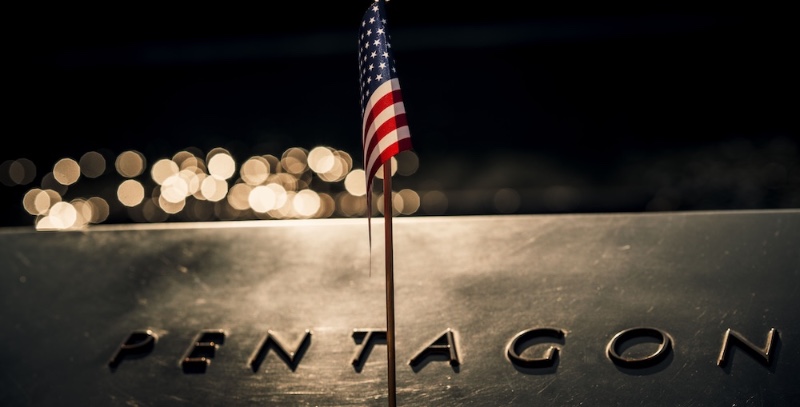
This Friday, Americans will remember the nearly 3,000 people killed 25 years ago on September 11, including those who died when American Airlines Flight 77 struck the Pentagon.
This anniversary arrives at a precarious moment for Pete Hegseth.
The United States is six months into a war with Iran. American ships, aircraft and military personnel have been operating under extraordinary strain.
Senior military leaders have been removed, and the Army’s civilian secretary has resigned after warning the president about the turmoil.
Is the military preparing for the next war — while protecting the people already fighting this one? Are its leaders being chosen for competence or loyalty?
Meanwhile, upheaval at the Pentagon continues.
On Sept. 5, Reuters reported that the White House had reviewed possible replacements for Deputy Defense Secretary Steve Feinberg. The Pentagon denied that a replacement process was underway.
For now, the White House continues to stand behind Hegseth. Trump has praised his performance, and there is no indication that the president has decided to replace his secretary of defense.
But Trump only needs to be persuaded that keeping Hegseth has become a major political liability.
The secretary of defense promised to purge the Pentagon.
Today, Hegseth has given the Pentagon everything it needs to purge him.

162,000 Jobs, Give or Take
Posted September 07, 2026
By Matt Insley
Buck Sexton: The DSA Has a Pentagon Problem
Posted September 04, 2026
By Matt Insley

When Jim Rickards Spotted a Whale
Posted September 02, 2026
By Matt Insley

The Gates Family Knows How to “Rule”
Posted August 31, 2026
By Matt Insley

The Fine Print Favors Meta
Posted August 28, 2026
By Matt Insley
