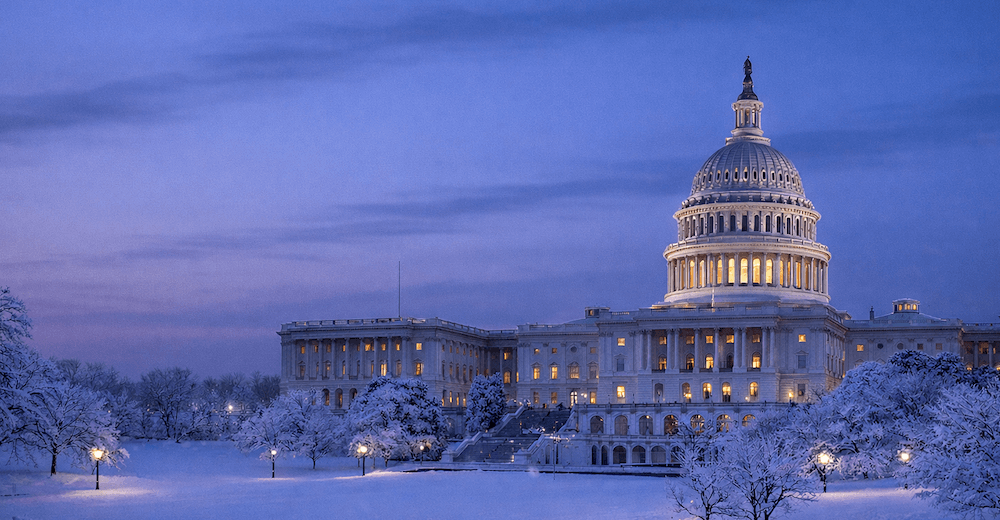
Posted February 23, 2026

By Matt Insley
State of the Union Preview
On Friday, the Supreme Court handed down a 6–3 decision in Learning Resources v. Trump, striking down sweeping tariffs the president had imposed under the International Emergency Economic Powers Act (IEEPA) — a 1977 emergency statute that, in the Court’s reading, never gave any president authority to rewrite tariff schedules wholesale.
Chief Justice Roberts, writing for the majority, said: “IEEPA contains no reference to tariffs or duties… And until now no President has read IEEPA to confer such power.” That last part isn't just legal boilerplate. It's the Court reminding everyone that tariffs have always been Congress’s turf.
The principal dissent — written by Justice Kavanaugh and joined by Justices Thomas and Alito — warned that the ruling could force the government to refund potentially upward of $175 billion in tariff payments already collected.
That mess is now remanded to the Court of International Trade, where almost 2,000 refund lawsuits will grind along for months.
Within hours of the Supreme Court’s decision, Trump announced a fresh 10% global tariff under Section 122 of the Trade Act of 1974 — and by the next morning pushed it to the maximum 15%. But Section 122 tariffs expire after 150 days unless Congress extends them. The clock is ticking.
Trump’s immediate reaction to the Supreme Court's ruling? Characteristically combustible.
Your Rundown for Monday, February 23, 2026...
Trump Could Hit the Accelerator
In fact, the president said he was “ashamed of certain members of the Court” and called them “fools and lapdogs.” That’s not just venting. That might even be part of his script for Tuesday night’s State of the Union address…
On tariffs: Trump rarely treats setbacks as losses. He reframes them as proof that the system is stacked against him — and his address will almost certainly follow that pattern.
Expect him to argue that judges are slowing down his ability to protect American industry and workers, even as he promises new ways to apply tariffs via different laws.
The message will be simple: They tried to stop me. I found another way.
Including Section 232 of the Trade Expansion Act of 1962 which lets the president impose tariffs on specific goods if the Commerce Department finds they threaten national security — a standard courts have historically refused to second-guess.
Since the start of Trump’s second term, 12 new Section 232 investigations have been initiated, and every completed investigation has led to tariffs. The semiconductor investigation, for instance, wrapped in December 2025; a 25% tariff on advanced chips took effect January 15. A pharmaceutical investigation is still underway.
Trump could announce from the podium that he’s fast-tracking new and expanded tariffs on both industries — and those tariffs would be legally durable in a way IEEPA tariffs never were, rendering Friday’s ruling virtually irrelevant overnight.
The wild card — and it’s a real one: Trump said Thursday he expects to make a decision on Iran “within the next ten to fifteen days, maximum.”
Since June 2025, when U.S. forces struck Iran’s nuclear facilities in a joint operation, talks have resumed — cautiously, indirectly, with Oman serving as go-between.
A second round of indirect talks was held in Geneva on Feb. 18. Iran's Foreign Minister Abbas Araghchi described “good progress” and said the two sides “reached broad agreement on a set of guiding principles.”
Steve Witkoff and Jared Kushner are pushing for a deal. Sen. Lindsey Graham is urging a strike. The White House is amassing the largest U.S. military presence in the Middle East in decades.
The divergence between what each side says it wants is still enormous. Trump wants zero enrichment on Iranian soil. Iran says it has the right to enrich uranium. A senior U.S. official told Axios the administration is willing to consider “token enrichment” if Iran can prove the plan blocks every path to a bomb.
So here’s the scenario: Trump uses Tuesday night’s State of the Union not to announce peace — but to announce an ultimatum. From the podium. In primetime. To the whole country and whoever else is watching.
A State of the Union ultimatum to Iran would be historically unusual — but so was bombing seven countries in one year.
The stakes aren’t negligible either. Twenty million barrels of crude oil per day transit the Strait of Hormuz. A military strike on Iran — even a limited one — could send oil prices and global markets into territory that makes the tariff drama look quaint.
Whatever happens in that chamber on Tuesday, one thing is clear: The people who thought Friday's ruling would slow this down fundamentally misread President Trump.
The IEEPA tariffs are gone. Section 122 tariffs are ticking. Section 232 investigations are accelerating. And a nuclear negotiation is hanging by a thread.
The Court had its say. On Tuesday, it’s Trump’s turn.
Market Rundown for Monday, February 23, 2026
S&P 500 futures are down 0.45% to 6,890.
Oil is up 0.30% to $66.65 for a barrel of WTI.
Gold is up 1.85% to $5,175.20 per ounce.
And Bitcoin’s down 1.70% to $66,240.

Elon: In A.I. We Trust
Posted February 20, 2026
By Matt Insley
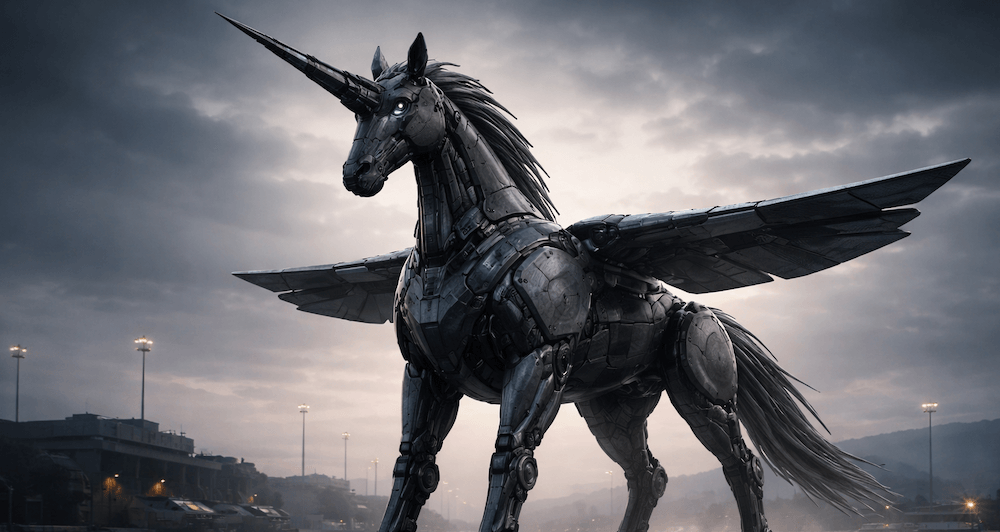
War Unicorns: Adapt or Die
Posted February 18, 2026
By Matt Insley

Wall Street’s Secret Society
Posted February 16, 2026
By Matt Insley
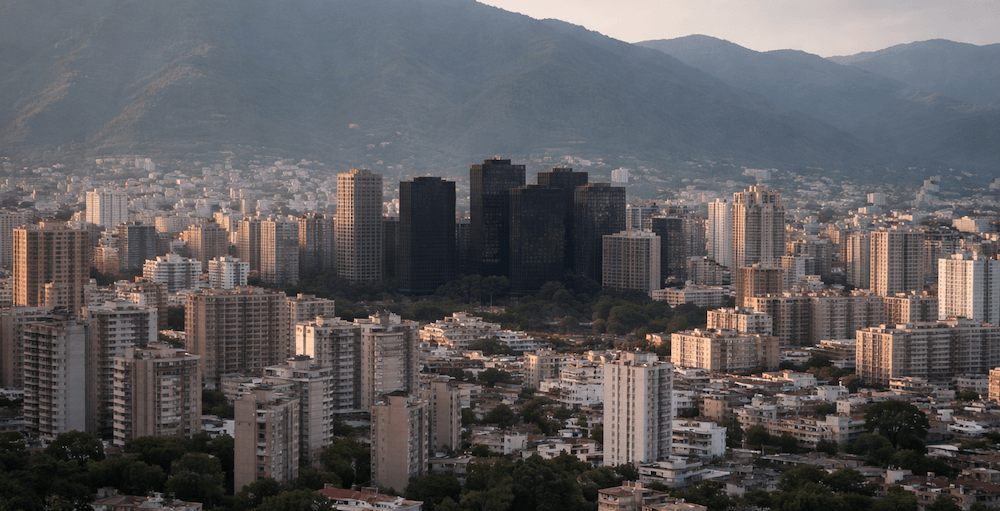
Buck Sexton: Caracas Has Tehran’s Full Attention
Posted February 13, 2026
By Matt Insley

The Ring Cam’s AI Surveillance
Posted February 11, 2026
By Matt Insley
