Posted September 28, 2026

By Matt Insley
The Re-Education of Jack Ma
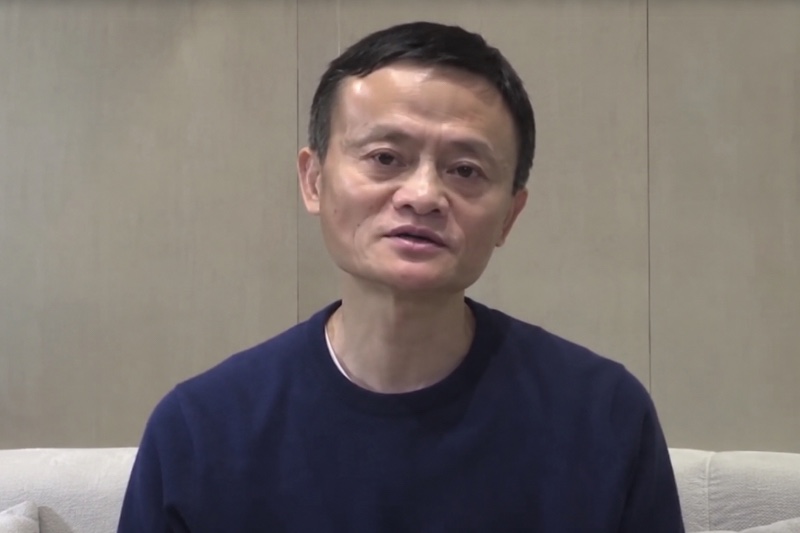
Jack Ma stood before some of China’s most powerful financial officials.
Chinese banks, he said, operated with a “pawnshop mentality,” demanding collateral and guarantees instead of embracing new forms of credit.
Then he went further.
China didn’t suffer from systemic financial risk, Ma argued, because China barely had a financial system to begin with.
This was not some dissident speaking from abroad.
This was Jack Ma.
The former English teacher built Alibaba into an e-commerce colossus and became one of China’s most famous businessmen.
Now his financial technology company, Ant Group, was preparing to raise roughly $37 billion in Shanghai and Hong Kong.
It was set to become the largest IPO in history.
Investors were practically throwing money at him. Retail investors alone submitted bids worth about $3 trillion for Ant shares.
But then Ma delivered his “pawnshop” speech in October 2020.
Your Rundown for Monday, September 28, 2026...
Magnets, Yttrium and the Pentagon’s 2027 Deadline
Nine days later, Chinese regulators summoned Ma and other Ant executives.
The following day, Nov. 3, 2020, the Shanghai Stock Exchange suspended Ant’s listing. Hours later, Ant suspended its planned listing in Hong Kong, too.
The $37 billion IPO was dead two days before Ant shares were scheduled to begin trading.
Then in December Beijing launched an antitrust investigation into Alibaba. In April 2021, regulators fined the company 18.2 billion yuan, then worth about $2.75 billion, for anticompetitive practices.
And Ma? One of the most recognizable businessmen on Earth dropped out of public view for almost three months.
When he resurfaced in January 2021, it was via video, speaking to a group of rural teachers.
Two years later, Ant announced a restructuring that left Ma without control of the company.
Jack Ma had money, celebrity and an international business empire.
Beijing still had the last word.
That episode revealed something larger than the limits of one billionaire’s power. It showed just how far Beijing’s reach could extend into a company the rest of the world regarded as a private enterprise.
Six years later, the same question of foreign control has become far more consequential for America’s supply chains.
In July, President Trump ordered the Pentagon to look deeper into the foreign companies embedded in America’s defense supply chains — all the way back to the raw materials.
Last week, we showed you China’s grip on the rare earths behind powerful permanent magnets — and on yttrium, the obscure metal that helps jet-engine parts survive temperatures above 2,000°F.
These vulnerabilities are already buried inside the machinery America depends on.
The stakes, then, are no longer a $37 billion IPO or an e-commerce empire.
They’re minerals, engine components and electronic systems the U.S. military cannot readily replace.
Jim Rickards has been tracking the companies caught in Washington’s push to reduce that dependence. He calls them Trump’s Blacklist.
Starting Jan. 1, 2027, the Pentagon will face tougher limits on buying certain critical materials tied to China. Trump’s July order also makes it harder to sidestep those restrictions.
But a blacklist creates a second list almost by definition.
If Washington wants certain foreign suppliers out of critical American supply chains, it needs other companies to take their place.
And in the scramble to replace them, Jim Rickards and his team see tremendous investment opportunities.
Market Rundown for Monday, Sept. 28, 2026
S&P 500 futures are down 0.35% to 7,778.
Oil is up 2.85% to $95.05 for a barrel of WTI.
Gold is down 2.75% to $4,201.50 per ounce.
And Bitcoin’s down 1.65% to $83,300.

The 69X Metal
Posted September 25, 2026
By Matt Insley

You’re Flocked
Posted September 23, 2026
By Emily Clancy
Breaking China’s Grip in Minnesota
Posted September 21, 2026
By Matt Insley
Wednesday’s OTHER D.C. Vote
Posted September 18, 2026
By Matt Insley

Six Years of Inflation, Measured in Silver
Posted September 16, 2026
By Matt Insley