Posted June 12, 2026

By Matt Insley
Warsh's Shrinking Inflation Options
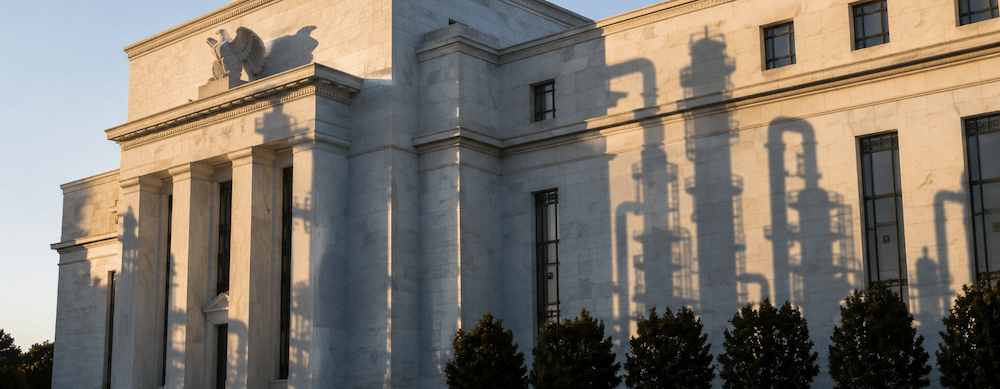
On May 22, new Fed chair Kevin Warsh stepped into arguably the most powerful economic job in the world. Three weeks later, inflation punched him in the face.
The Bureau of Labor Statistics dropped the May Consumer Price Index (CPI) on Wednesday, and the headline number hit 4.2% year-over-year — the fastest pace since April 2023.
While core CPI, which strips out food and energy, came in at a relatively tame 2.9%, energy prices surged 23.5% over the past year. And that one category accounted for more than 60% of the monthly increase.
So yes, inflation is bad. But it’s mostly bad for one very specific reason: oil.
Which brings us to Warsh’s problem. “You can’t print more oil,” says Adam Sharp, editor at The Daily Reckoning.
Dan Amoss, chief analyst at Strategic Intelligence, cuts to the chase: “Warsh and the Fed cannot do anything about Hormuz-driven inflation. It’s a supply-driven phenomenon.”
So what are Warsh’s options? Raise rates and fight inflation that way?
Your Rundown for Friday, June 12, 2026...
What the Fed Can’t Fix
Byron King, contributing editor at Strategic Intelligence, isn’t buying it.
“Will Warsh raise rates to keep the price of salad and hamburger down? He’d be foolish to do so. Because he can’t touch the farmers’ key input costs — diesel, fertilizer — and grocery prices would still stay up.”
Higher rates, Byron adds, would mean higher Treasury borrowing costs and more pain for indebted U.S. households.
Markets currently expect the Fed to hold rates steady through the rest of 2026, but that calculus is getting complicated fast.
For one thing, the ECB just raised rates 25 basis points at its June meeting — its first hike since 2023 — citing the exact same inflation culprit: the Iran conflict and oil shock.
That matters because the Fed and ECB have moved in the same direction on rates, especially since 2007, with the ECB typically following the Fed by about five to seven months.
This time Europe blinked first. Research shows the relationship runs both ways — a hawkish surprise from Frankfurt tends to pull Washington in the same direction.
That said, the CME FedWatch Tool still prices in almost no chance of a 2026 rate cut. But after the hot April and May CPI prints, some traders are assigning real odds to an actual rate hike.
“I just can’t see them hiking rates any more,” Adam tells me. He also flags something worth watching: the Fed has quietly restarted balance sheet expansion. “They won’t call it QE. But it is what it is.”
With the real interest rate now turning negative — headline CPI above the Fed policy rate of 2% — holding rates steady is effectively a passive easing.
In fact, Dan notes, the Fed doesn’t have to cut a single basis point to be loose. Inflation is doing the work for them.
Economists at Oxford Economics, meanwhile, think May could represent the 2026 inflation peak — though they warn core inflation will be slow to come down even under the best circumstances.
In the meantime, Warsh can give speeches. He can restructure how the Fed communicates. What he cannot do is end a war, reopen the Strait of Hormuz or make a barrel of oil cheaper by Tuesday — the first day of the next FOMC meeting.
Sometimes the most important thing a Fed chair can do is admit what’s not in his toolkit — and hope the market doesn’t punish him for it.
Warsh’s first FOMC meeting wraps June 17. We’ll be watching — and our team will have a breakdown of whatever the Fed decides to do. Or not do.
Market Rundown for Friday, June 12, 2026
S&P 500 futures are up 0.55% to 7,435.
Oil’s down 3.15% to $84.95 for a barrel of WTI.
Gold is up 2.80% to $4,229 per ounce.
At the time of writing, Bitcoin’s slightly in the red at $64,500.
James Altucher: The Truth About SpaceX
Posted June 10, 2026
By Matt Insley

Who Is the Next Elon?
Posted June 08, 2026
By Matt Insley

Platner’s Moment of Truth
Posted June 05, 2026
By Matt Insley
Do Americans Still Believe in America?
Posted June 03, 2026
By Matt Insley
Mick Jagger, Moon Landings and SpaceX
Posted June 01, 2026
By Matt Insley
